
AAC (Augmentative and Alternative Communication) in Perth
Superyou Therapy is an NDIS-registered provider of speech pathology in the Perth metro area. With hubs in Cannington (central), Fremantle (south), and Wanneroo (north), our team of speech therapists can travel to your home, school, or workplace in the metro area, to provide AAC.
Got a question? Send us an inquiry, phone us on 08 6263 8623, or email us at hello@superyou.org.au!
What is AAC?
What is AAC you ask? AAC stands for Augmentative and Alternative Communication, which means to use an alternate method to improve and support communication. It includes tools, devices, or strategies which a person can use to communicate without speaking, or to support their speech.
AAC is helpful for people who find it hard to use spoken language to communicate their needs and participate in their everyday life.
What is Physiotherapy?
Examples of AAC
- Typing & texting
- Drawing & writing
- Gestures & facial expressions
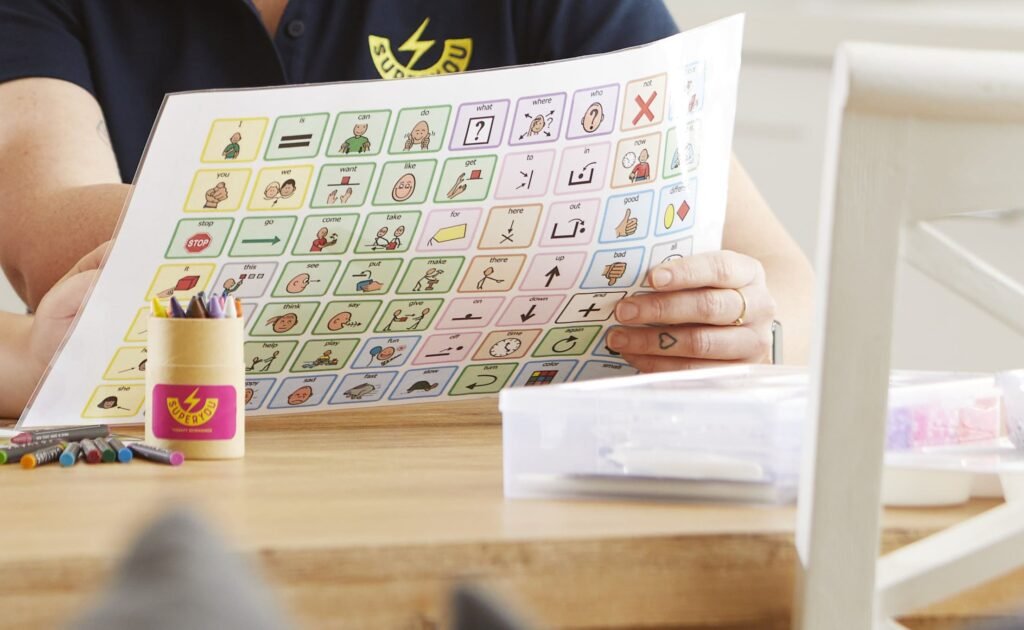
- Communication books (including PODD books)
- Symbol boards (core boards, ALS boards, etc)
- Alphabet charts
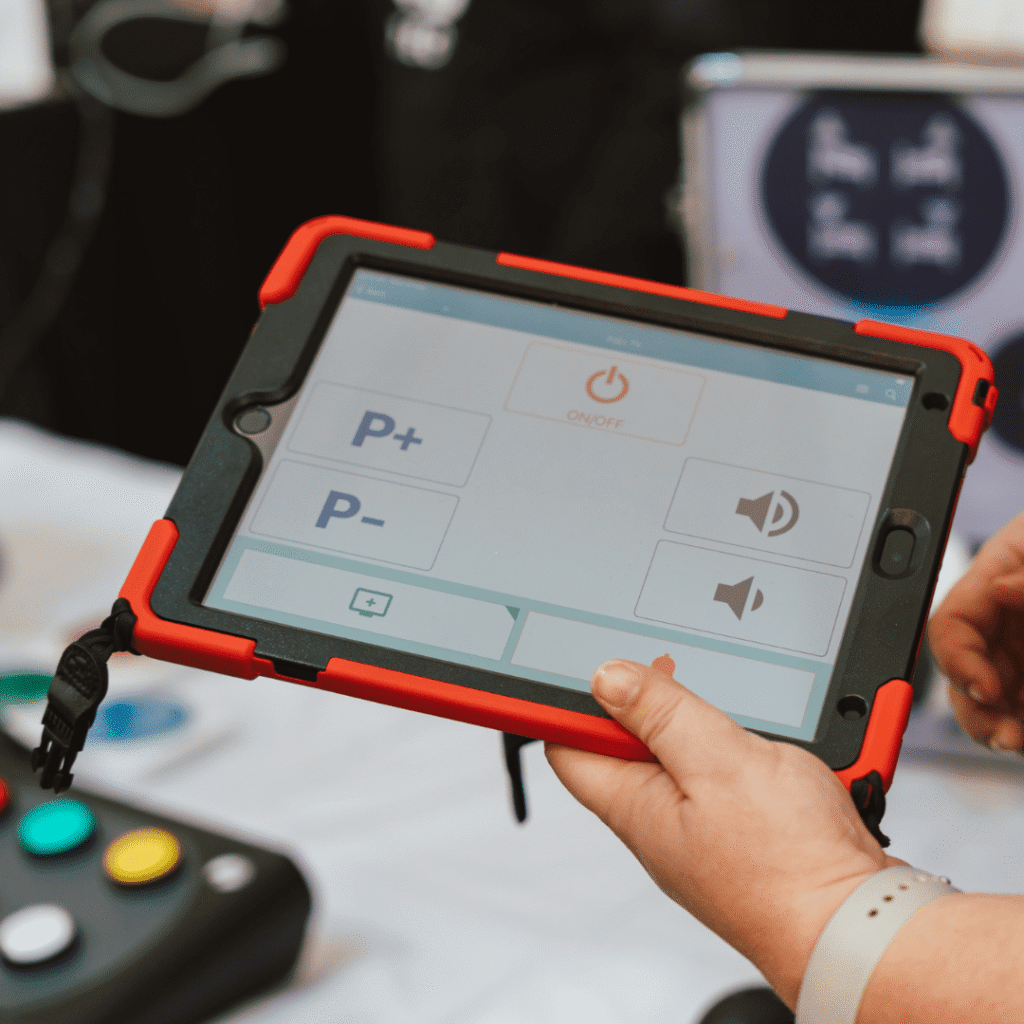
- Speech generating devices (iPads & dedicated systems)
- AAC apps – which can be downloaded iPads and tablets.
Examples of AAC
You may consider AAC if you:
- Are non-speaking
- Use single words only
- Have difficulty using verbal expressive language to communicate your needs
- Have difficulty with the clarity of your speech
- Have difficulty understanding spoken language
- Have unreliable and variable verbal communication capacity.
Some people use AAC for a short period of time, while others use AAC for their whole life and make AAC their preferred communication method.
The AAC process
Our AAC service typically starts off with 3 hours, which helps us connect you with an AAC consultant and properly map out a plan of support for you, including estimated hours, in order to best meet your needs.

Step 1: Assessment
The first step is meeting with a speech pathologist. They will get to know you and understand all aspects of your life. Your speech pathologist will discover what your communications wants, needs and preferences are. A senior AAC consultant will be involved to ensure the best device is selected for your communication style.
Step 2: Trials
You will usually trial at least 2 different AAC systems with support from a speech pathologist in your everyday environments. During this stage you’ll be able to see how a communication system fits in with your daily life.
We recommend you have 4 sessions with each device you trial to give you time to see if its right for you.
Step 3: Quotes and reporting
Your speech pathologist will organise the quotes for your device (including all special features and additional equipment) and work with an OT and physio to ensure your device is perfectly suited to your needs.
Your speech pathologist will write an equipment application which will be reviewed by a senior AAC consultant before being submitted to NDIS.
Step 4: Receiving your device
Once your device has been approved by NDIS it will be ordered by a supplier. Once ordered, it can take up to 8 weeks to be delivered to you.
Your Speech Pathologist will work with you and your support network to set up your device and show you ways it can be included into your daily routines.
The AAC process
In some cases, additional funding may be required for consults with specialist AAC consultants, external providers, your existing therapy team and/or OT and physio to ensure that all equipment recommended is appropriate and suitable for you.

In some cases, additional funding may be required for consults with specialist AAC consultants, external providers, your existing therapy team and/or OT and physio to ensure that all equipment recommended is appropriate and suitable for you.
AAC is for everyone!
AAC is a tool used to support communication for anyone that may need an alternative way of communicating or a way to support their existing and developing communication skills, right across the lifespan!
Our speech pathologists can work with people of any age to identify the tools that work best for them. It’s all about supporting the use of meaningful language and communication in the home, childcare, school, workplace, social settings and anywhere else in community.
Misunderstandings about AAC
“I don’t want to teach my child AAC because I’m worried it will delay the development of their speech and then they won’t talk at all.”
In fact, research has consistently found that AAC augments and supports natural language development in children by supporting them to see the language that is being used, developing their ability to understand the words and concepts through the use of pictures and symbols. Additionally, when using systems that provide voice output (the device speaks the words that have been selected, the user is exposed to models of the word, that they can learn from).
“My child is too young to understand AAC.”
or
“My client is too old to learn a new skill like AAC.”
Research has shown that AAC can help people of all ages to communicate. AAC is used successfully in children as young as a few months old, all the way through to older adults living in their 90’s.
“I can’t use AAC because I have difficulty moving my arms.”
A physiotherapist and occupational therapist will work together to use your existing movement to control your AAC device.
Our therapy team will work closely your speech pathologist to find appropriate AAC solutions for you. Some people use eye gaze technology to speak when movement is difficult. Other people use switches to access their communication device, giving them control through using parts of their body that have reliable movement (such as their chin, or elbow). There’s no one solution for everyone – it’s all about making it work for an individual’s needs.
AAC services near you
We’ll connect you with a speech pathologist who can support you in your journey to AAC in Perth.
Contact us online, phone us at 08 6263 8623, or email us at hello@superyou.org.au!